Tuesday, March 12, 2013

DC Animated Adapatations I'd Like to See


DC Universe Animated Original Movies recently completed their two-part adaptation of one of the company’s most famous and revered comics: Frank Miller’s classic Batman: The Dark Knight Returns (read my reviews of Part 1 and 2). That makes 15 direct-to-video films adapted from popular arcs so far, and most of them have been pretty solid. Next up is an adaptation of Geoff Johns' “Brainiac" arc, and an adaptation of "Flashpoint" is alleged to be coming out in the future.

But the DC Universe is full of stories yet to be tapped for a film. Here are a few I’d like to see get a DVD release of their own someday:


Batman: The Killing Joke

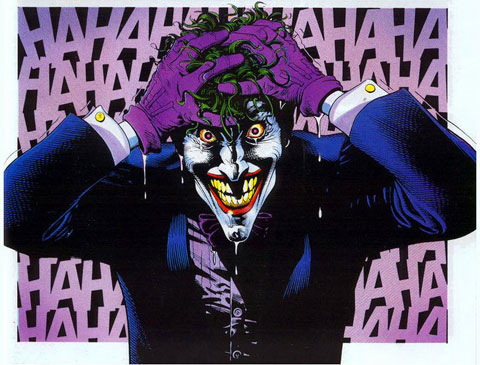
It’s a shame the great Alan Moore never did a major run on a character like Batman or Superman (check out his classic run on Swamp Thing; I’d rank it higher than even Watchmen). The few stories he did write had a tremendous impact on the characters’ history, none more so than The Killing Joke. The book gave us a peek (not a full look, but enough) inside the Joker’s warped psyche, telling the origin (or rather, a possible origin) of Batman’s greatest foe. Brian Bolland and John Higgins’ artwork featured some frightening images, but an animated adaptation could be a truly dark, disturbing (and definitely R-rated) work for mature Bat fans. 


Batman: The Long Halloween

Set early in the Batman mythos, this miniseries follows the Dark Knight and his allies James Gordon and Harvey Dent as they track down a serial killer who strikes against mobsters on holidays. This whodunit is an entertaining and addicting mystery, featuring popcorn mob movie tropes as well as several members of Batman’s Rogues Gallery (plus a retelling of the origin of one famous face). Like a good crime novel, this one is hard to put down, and is a perfect candidate for an adaptation. Its sequel Dark Victory is pretty good, too.


Superman: Red Son

This Elseworlds story presents an interesting idea: How would the world be different if Superman were fighting not for the American Way, but the Soviet way? As the Man of Steel uses his powers to spread world communism, America's only hope is none other than Lex Luthor. The story also features alternate versions of Wonder Woman, Batman, and Green Lantern, but it explores a theme applicable to all versions of the Superman mythos: What gives him, an alien with powers far beyond those of humans, the moral authority to interfere in mankind’s affairs? At three issues, the arc could easily fit into the 70-75 minute length of one of these movies.


Sandman

Why not take a dip into DC's adult-oriented Vertigo line? There have been rumors for years that Neil Gaiman’s highly acclaimed title is slated for a movie or TV series, but I have my doubts about a live action adaptation. My fear is that it will end up just being actors swimming in a mess of CGI. But an animated adaptation could bring all the fantastic imagery of the comics to life without it looking fake, and there are several arcs in the 75-issue run that can stand alone as individual movies (my favorite: “Season of Mists”). Who knows: maybe Gaiman himself can be recruited to write an original story for a film.


A proper Hellblazer

John Constantine has been around nearly three decades, and his series was one of the first books in the Vertigo line. He deserves way better than that awful Keanu Reeves vehicle. A big-screen reboot seems unlikely, but DC could make things right with an animated film, featuring a British Constantine and all the black humor, sociopolitical commentary, and macabre sensibilities of the comic. And since the sly occultist exists within the greater DC continuity, appearances by characters like The Justice League and others (Swamp Thing?) aren’t out of the question.


Alright, comic fans. What stories would YOU like to see DC adapt?

Monday, March 11, 2013

The Dark Knight Returns, Part 2

**My review of Part 1**

When I heard that DC’s animated adaptation of Frank Miller’s classic Batman story The Dark Knight Returns would be split into two movies, I wondered why they don’t just make one longer movie. But then Part 1, released last fall, stood very well on its own as a movie.

Well, after seeing Part 2, I’m sticking with my original opinion. Many sequels (the good ones, anyway) require the viewer to see the previous installments to understand the story, but the movies themselves can stand alone as complete works. That’s not so in this case.

The movie picks up right where Part 1 left off. At the end of Part 1 (SPOILER!), the aging Batman (perfectly voiced by Robocop himself Peter Weller) defeated the savage leader of the violent gang known as the Mutants. Now, the Mutants have splintered into several gangs (one of whom have dubbed themselves the Sons of Batman and see the Dark Knight as their new messiah), and on top of this, Batman faces some new challenges. His greatest ally, Gotham City Police Commissioner James Gordon (David Selby), is retiring, and while the new police force sees him as a threat, two figures from the past remerge: the Joker (Michael Emerson), who’s been in a catatonic state for ten years in the absence of his arch-nemesis, and Superman (Mark Valley), now a tool for the American government in fighting the Soviets (the comic was published during the Cold War, and instead of trying to rewrite the story or adapt it to modern geopolitical issues, the filmmakers just left it).

Part 1 was a pretty close adaptation of the comic, though it made appropriate changes accounting for the differences between a still panel and a moving picture (for example, Miller’s long patches of internal narration are eliminated or adapted into regular dialogue). Part 2 similarly adapts to the movie form, but this time, some more stuff got left out.

The comic explored themes of vigilantism and demagoguery regarding superheroes; Batman’s return may have brought hope to Gotham in a dark time, but it also inspired more violence in those who see him as an idol. It makes the reader really think about whether Batman is actually doing the right thing. You don’t get that opportunity with the movie because these themes didn’t make it, and the Sons of Batman are mostly left by the wayside until the finale (meanwhile, the swastika-pastied thug, a prime example of Miller's warped and gratuitous sensibilities, made it onscreen). Another casualty of the adaptation is the development of certain characters. For instance, in the comic, Superman’s loyalty to his country, to the point where he's doing the government's dirty work, is clearly a result of his righteousness and patriotism extended to too far a degree. That isn’t explored here, so he just seems like a jerk, the stereotypical brainless grunt but with a cape.

Basically, all the film leaves time for is the fights, specifically two big ones, and in this respect the feature is entertaining. The first fight is Batman’s final confrontation with the Joker, while the evil clown massacres a talk show audience (Fun fact: Conan O’Brien voices the unfortunate talk show host, who was modeled after David Letterman in the comic) and county fair. This is one of the most violent stretches ever shown in a Batman production, quite bloody for a PG-13 film, even an animated one. Emerson makes for a very good Joker, less darkly funny than most versions but more evil and just unabashedly cruel. Heath Ledger’s take in The Dark Knight is still the definitive portrayal, but between this film and John DiMaggio's portrayal in Under the Red Hood, DC Universe Animated Original Movies have produced two of the better Jokers onscreen.

The second is the climactic showdown between Superman and the Dark Knight on the streets of Gotham. It’s a little bit ridiculous to see a robotic exoskeleton-wearing Batman tear objects out of the ground and pummel the Man of Steel, and some of the internal dialogue from the comic is changed into dopey spoken words. Still, it’s very enjoyable, and certainly adapts the epic fight from the comic (which gives you an adrenaline rush despite consisting solely of still drawings) as well as it could for a motion picture (and it sure beats the anticlimactic final fight between Batman and Bane in The Dark Knight Rises). And after all, it’s a cartoon, so it seems a little silly to complain about it not being realistic.

Despite some changes, the movie isn’t bad, but it doesn’t seem like a full film. While Part 1 is a complete work, Part 2 just seems like an extension of the first part. Watching it by itself is like catching the second half of a movie. But put both parts together, and this is one of the best animated adaptations DC has yet produced.

Friday, March 1, 2013

A Good Day to Die Hard


It’s been 25 years since the original Die Hard. The movie still holds up as a classic of the action film genre, and also produced some high-quality sequels (I even liked 2007’s Live Free or Die Hard, despite the fact that it went PG-13 and had a few jump-the-shark moments like that jet sequence). But even the best series reach a point where they just run out of gas. Most franchises that have been around this long (or even less time) would just start over, but Die Hard seems to be one that’s reboot-proof (I mean, can any anyone really replace Bruce Willis as John McClane?). So instead, we get another sequel, A Good Day to Die Hard.

This time around, the series leaves America for Russia, as John McClane travels to Moscow to help his estranged son Jack (Jai Courtney), who has gotten mixed up in a plot involving Russian criminals and politics. Almost immediately, some bad guys try to ambush the detained Jack, and the truth is revealed: Jack is really a CIA agent tasked with protecting Yuri Komarov (Sebastian Koch), a former Soviet arms dealer targeted by corrupt politicians. So when Komarov is captured, father and son McClane battle from Moscow to Chernobyl (yeah, that Chernobyl) to rescue him.

The problem with the movie isn’t that the formula is stale. It’s that it’s not there at all. Despite having the same characters, it doesn’t seem like a Die Hard film. Notably absent is the humor, Willis’ gruff, sarcastic wit and one-liners that made the past pictures so much fun (even McClane’s famous profane catchphrase seems misused here). Also missing is the everyman quality that made the character so appealing: in the earlier entries, McClane seemed like a regular guy who just happened to get caught in the middle of terrorists’ evil plans. He was always way outmatched by his enemies, and even though he’d save the day, he’d be beaten and bloody when the credits rolled. By Live Free or Die Hard, however, he became the prototypical near-indestructible action hero who barely looked fazed by his circumstances and even expected them. I could give it a pass then because the movie still had the humor, but A Good Day to Die Hard doesn’t even have much of that. And it’s hard to believe that a guy can walk away from so many explosions, shootouts, and falls from high places through things more unscathed than he could a quarter-century ago.

Another hallmark of the series has always been strong supporting roles, as Willis has had some effective allies (Dennis Franz, Samuel L. Jackson, and Urkel’s neighbor among them) and great villains (Alan Rickman, Jeremy Irons, Timothy Olyphant) to play off of. This time, Jai Courtney is effective as the younger McClane. At times, he arguably even seems more like the leading man in the action at hand, with Willis playing sidekick. Otherwise, though, there are no real memorable characters good or bad, with the lack of a strong villain really draining any conflict from the story (as does a mediocre plot twist late in the film).

The only thing the movie gets right is the action, which is quite well done. There's a nice balance of real (or at least real-looking) stunt work and computer-generated effects that are edited very efficiently, and none of it drifts off into the indecipherable muddle of so many modern action films (I’ll avoid the clichéd dig at Michael Bay). Diehard fans of the series will also catch an obvious homage to the first film in one scene, complete with the original’s score. This element of the movie keeps it from being a terrible experience.

All in all, this one's pretty average: not bad, not great. It’s only a letdown because it has the Die Hard name on it; if it had a different title, it’d just be your typical shoot ‘em up action flick starring Bruce Willis.

Tuesday, February 26, 2013

Thoughts on the Oscars

NOTE: I haven't seen all of the nominated films, so this list might seem a little, shall we say, incomplete. I'm also only doing the top awards because I don't know how to judge the technical or aesthetic categories.


Best Picture: Argo

I liked Argo, and after it and The Town, I think Ben Affleck’s established himself as a good director. But Best Picture? Of the five nominees I saw (the others being Django Unchained, Lincoln, Silver Linings Playbook, and Zero Dark Thirty), I’d rank it fifth. Lincoln would be my number one of that group. MY pick for the best film of 2012, Skyfall, wasn’t even in the running. Seriously, they couldn’t even manage a token nod for the greatest entry in a storied franchise?


Best Director: Ang Lee, Life of Pi

I haven’t seen Life of Pi, so I can’t comment on the film, but I‘m not surprised that Lee won the award. The film is by all accounts a technical marvel, really showcasing how the newest technologies can be utilized to make a fully optimal visual experience. I thought James Cameron might win for directing Avatar three years ago for the same reason, but that didn’t come to pass (because let’s face it: for all its technical achievements, Avatar’s story was still a little weak; Life of Pi, being adapted from a bestseller, was more suited for one of the most prestigious awards).


Best Actor: Daniel Day-Lewis, Lincoln

Can’t argue with this one.


Best Actress: Jennifer Lawrence, Silver Linings Playbook

This was between her and Jessica Chastain for Zero Dark Thirty. Both performances were very good, but it’s hard to compare them because the movies are so different. Film quality aside, I enjoyed Silver Linings Playbook more than the super grim Zero Dark Thirty, so I have no problem with Lawrence winning for the more enjoyable of the two.


Best Supporting Actor: Christoph Waltz, Django Unchained

Honestly, I was surprised he was even nominated, let alone won, because I thought his role was so similar to his role in Inglourious Basterds, which won him the same award three years ago (if I were to nominate anyone from Django, it would have been Samuel L. Jackson). I’ve actually seen all the movies in this category, and I found Phillip Seymour Hoffman in The Master to be the best of the five.  And Javier Bardem deserved a nod in this category for Skyfall more than a few who actually were nominated.


Best Supporting Actress: Anne Hathaway, Les Misérables

Haven’t seen Les Mis, but judging by her take on "I Dreamed a Dream," she certainly has the pipes.

Monday, January 21, 2013

Zero Dark Thirty


2009’s Iraq War drama The Hurt Locker won six Oscars, including Best Picture and Best Director for Kathryn Bigelow, and was hailed as a great film about the Iraq War. I agreed with that assessment. The movie I’d most compare it to is Platoon (my favorite war film), as like Oliver Stone’s Vietnam picture, it eschewed political messages and Hollywoodized sentiment and simply presented an unfiltered look at warfare from the ground level.

The movie was also, according to many real veterans, highly inaccurate in its depiction of Iraq. Now, inaccuracy doesn’t automatically doom a movie (I mean, nobody watches Rambo to get a realistic look at combat, do they?), but when a film is purported to be a super accurate account of what it depicts, do allegations that it's not dim its power at all?
 
I can’t say for certain with The Hurt Locker because I have yet to revisit it, but this thought was there while watching Bigelow’s Zero Dark Thirty. The film claims to be the definitive account of the search for, and mission to eliminate, Osama bin Laden, and the production’s alleged consultation with the U.S. government suggests the filmmakers strived for total accuracy. And yet, I couldn’t shake the Hurt Locker allegations, and the controversy about this film on top of that, from my mind.

We all know the ending, so let’s get this out of the way: The raid on bin Laden’s compound during the film’s last 40 minutes is a fantastic work of filmmaking. It’s not a flashy Call of Duty-style firefight filled with explosions and extended shootouts with several minions. The killings are quick, efficient, and unglamorous. Women and children are in harm’s way, and some of them are killed, too. The mission’s slow, methodical, no-frills execution, along with perfect editing, gives the whole sequence a freeze-in-your-seat tension greater than any big action sequence in an escapist summer movie. It feels very real.

Until that point, the film shows the efforts of the CIA to locate the al-Qaeda leader. It’s a little like an espionage thriller, but fictional spy tales tend to have a set structure and sequence of events and clues for the viewer to piece together. In Zero Dark Thirty, clues and leads are all over the place, with little or no indication whether they’re of any value or dead ends. It’s not very easy to follow, like trying to put together a puzzle with a million fake pieces mixed with the real ones, and makes it seem like a miracle that the agency was able to find bin Laden.

What did find him, according to the film, was a lead pursued relentlessly over several years by a CIA agent based in Pakistan known onscreen as Maya (Jessica Chastain; the real names of those involved are not revealed, and all characters are listed only by their first names). Chastain’s performance consists almost purely of will, and she is a compelling center to the picture as she navigates a near-labyrinthine web of false leads and tips, as well as badgers her superiors and colleagues into following her lead when they believe it’s just another wild goose chase. It almost seems a little farfetched that this one person was so instrumental in locating bin Laden, but then, it also seems like blind luck that her lead turned out to be correct among so many that went nowhere.

Almost lost among the movie’s critical acclaim is a vocal minority chastising it as pro-American War on Terror propaganda. It’s hard to make that case watching the film. It’s very grim, almost hopeless in its tone. If the ending weren’t a foregone conclusion, the movie could be mistaken for a lament on the zero-sum gains the U.S. has seen in the War on Terror, and even when the raid is over and bin Laden is dead, the picture doesn’t take on a fist-pumping patriotic tone, or even offer a sense of satisfaction.

Which leads me to the element of the film everyone’s talking about: its depiction of torture. And yes, it makes it damn clear that what was done to detainees was torture, as what happens to them onscreen is clearly inhumane and cruel. It might be hard to watch for some on a visceral level, but its effect is more sickening and infuriating from a moral standpoint, to see what our country has done to people.

Bigelow has said that “depiction is not endorsement." Judging by her depiction of it, I don’t think she endorses torture. In fact, the main torture sequence seems almost anecdotal, as if to show that torture does NOT yield good results (which it specifically does not in the film). But the depiction of its effectiveness is mixed overall. Other times, tortuous methods seem like just part of the interrogation process. In one scene, when the characters are watching a TV interview with then-President-elect Obama condemning torture (the only appearance by a President in the movie in any capacity), they roll their eyes, either at the naiveté of the new Commander-In-Chief or because his election means they’ll lose support for such interrogation methods. If you were going by this movie alone, it’s hard not to get the sense that torture contributed to getting bin Laden. According to some official reports, that’s not true.

That’s the paradox about Zero Dark Thirty. Like The Hurt Locker, I’m not sure how real it is, but moreover, I don’t want it to be real. I can’t exactly say I liked the experience of the movie, not because of any flaw in the production—it’s technically masterful and quite compelling, worthy of many of the awards it’s been up for—but because of the horrible truths it depicts about what our country has carried out in our name.

Wednesday, January 16, 2013

Link to my The Book of Mormon review

I saw The Book of Mormon in Chicago this past weekend. You can read my full review of the production here.

I've seen a few plays in Chicago and on Broadway, but I'm not exactly what you'd call a regular connoisseur of musical theater. I am, however, a longtime fan of South Park, so there was no way I was going to miss out on this play. But even if you've never seen an episode of South Park or a musical, the show is fantastic comedic gold.

Nay, comedic PLATINUM!

Friday, December 28, 2012

Django Unchained


I know I’m about to incur the wrath of many a film fan, but I have to be honest: Prior to Inglourious Basterds, I always felt Quentin Tarantino was overrated.

His proponents lavish praise on his dialogue and style, but I always saw through those trappings. Underneath all the endless talking and references to old movies, I never found any substance. What little plot his films had just seemed like ways to loosely tie together pieces of excess just for shock value, or to drop a lengthy dialogue exchange that has little or nothing to do with the story (I mean honestly, who cares what they call a Quarter Pounder in France?). For all the flash, his films were empty and shallow.

So what changed with Inglourious Basterds? For one, the film actually had a good plot. A purely fantasy plot, maybe (and one that notably alters history), but a compelling and interesting one. But moreover, instead of just aimless babble for dialogue’s sake, the extended exchanges between the characters actually had a point, subtly building tension in some scenes and making for offbeat humor in others. For all the bloody splatter on display, the movie was actually something close to sophisticated.

Well, sophisticated doesn’t exactly fit the description for Django Unchained. It’s a very brutal, bloody, messy picture, with more offensive content than you’d think Hollywood would allow these days. But along with the extreme excess, Tarantino again presents an interesting story, depicted with a style reminiscent of the Spaghetti Westerns of old. I must say, the director is starting to grow on me.

The time is just prior to the Civil War, when slavery was still rampant in the Deep South. Against this backdrop, German dentist-turned-bounty hunter Dr. King Schultz (Christoph Waltz) rescues the titular slave (Jamie Foxx) from a chain gang in Texas. In exchange for leading him to three fugitives, Schultz offers Django his freedom, and the two become partners in the bounty hunting trade.

Foxx adds a sort of blaxploitation twist to the laconic Man with No Name-like archetype, while Waltz is essentially a good-guy version of his charming but ruthless character in Inglourious Basterds (I got the feeling the character was made German just because Tarantino wanted to work with him again; fine by me, because he’s fantastic). The two play off each other well with quick wit while exhibiting all the qualities of classic Western antiheroes.

In fact, though ostensibly a tribute to old Westerns (the title character is even named after a character in several Spaghetti Westerns, one of whose portrayers makes a cameo), the picture actually stands on its own as a quality entry in the genre, with a few more modern touches. Still, the movie finds some time to humorously send up the genre (the most hilarious scene, featuring Don Johnson leading a dimwitted lynching party, is like a deleted scene from Mel Brooks’ Blazing Saddles). 

That’s about the first hour of the film. Then, the two leads travel to Mississippi and hatch a plan to rescue Django’s wife Broomhilda (Kerry Washington) from the suave, psychotic plantation owner Calvin Candie (Leonardo DiCaprio), and the tone changes in more ways than one. Here, Tarantino’s penchant for long exchanges of dialogue comes on display, and though some scenes go on a little long, they will please the filmmaker’s longtime fans. More noticeably, though, the picture takes a turn for the unpleasant in its unflinching depiction of slavery, and that’s an understatement.

The human bondage and racism on display is shocking. Not shocking like the uncomfortable feeling you get watching parts of Gone with the Wind in today's world, but turn-your-stomach shocking. In fact, it goes so far in depicting such brutality that it almost seems like it must be exaggerated. Maybe the things onscreen really did happen, and Hollywood has sanitized our vision of what slavery was really like. If that’s the case, Tarantino deserves credit for not holding anything back in depicting a cruel chapter in American history. But it seems like he's not so much trying to reflect the time as just be as mean and vile as possible.

This is especially the case with DiCaprio’s Candie, who crosses the line from a typical slave owner who sees people as property to a sadistic psychopath who takes pleasure in inflicting horrible pain. The actor’s obviously pushing to be as awful a human being as he can (so much that he actually comes to a point where it’s hard to take him seriously anymore because he’s just so over-the-top). The most offensive character, however, is Samuel L. Jackson as an aging house slave so broken that he’s arguably as bad as his master. It’s hard to tell if he’s trying to play it straight or an absurd caricature, as the character walks a razor-thin line being cruelly funny and incredibly sad. Either way, it’s appalling. Jackson deserves an Oscar just for the fearlessness in taking on the role.

So after describing all this unpleasantness, why am I recommending Django Unchained? Because all the racially obscene content makes the violent retribution—and it’s very bloody, indeed—all the more satisfying. Even the most politically correct pacifist viewer won’t be able to deny the basest pleasure in seeing such awful characters get theirs. This one requires a pretty strong stomach and even thicker skin, but for those with both, it's the feel good kill whitey movie of the year. If that statement offends you, see something else!